Less oil.
Smaller footprint.
Global impact.
When you extend frying oil life, you don’t just save on procurement costs. You reduce demand across an entire global supply chain, from rainforest to refinery to fryer. Without changing how your kitchen operates.
Calculate your impactLess oil. Less impact
Frying oil doesn't appear from nowhere. Behind every litre in your fryer is a chain of land, water, energy, and emissions, from the farm to the ship to the refinery to your kitchen. When you reduce demand, you shrink that entire chain.
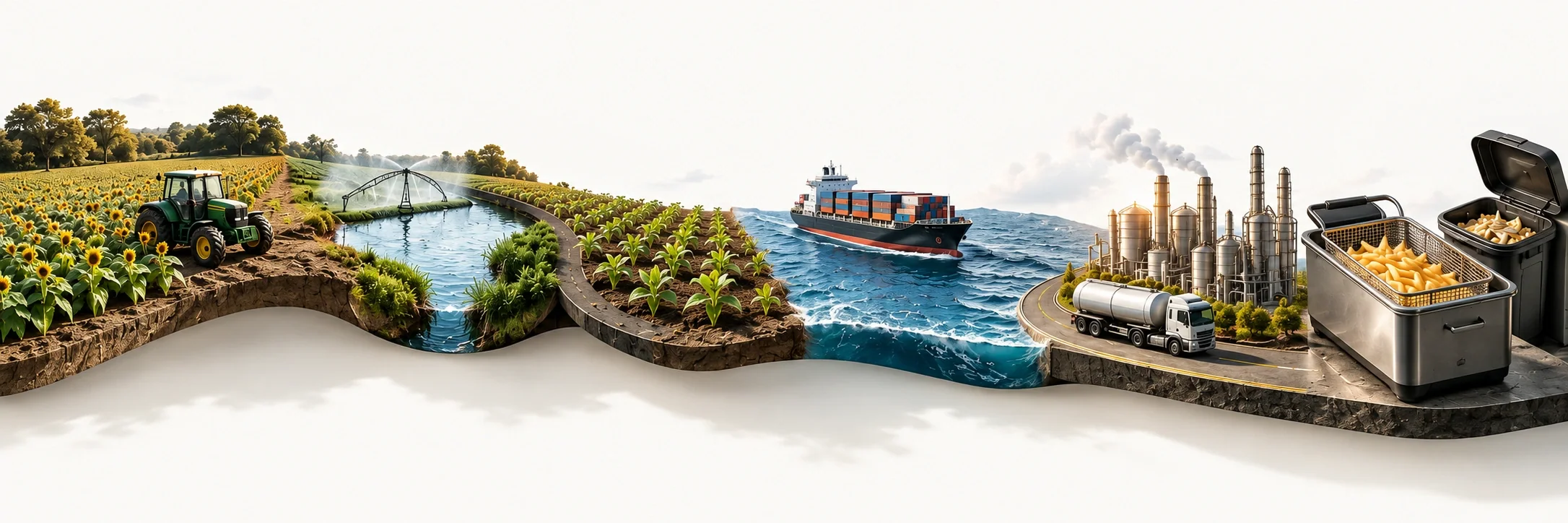
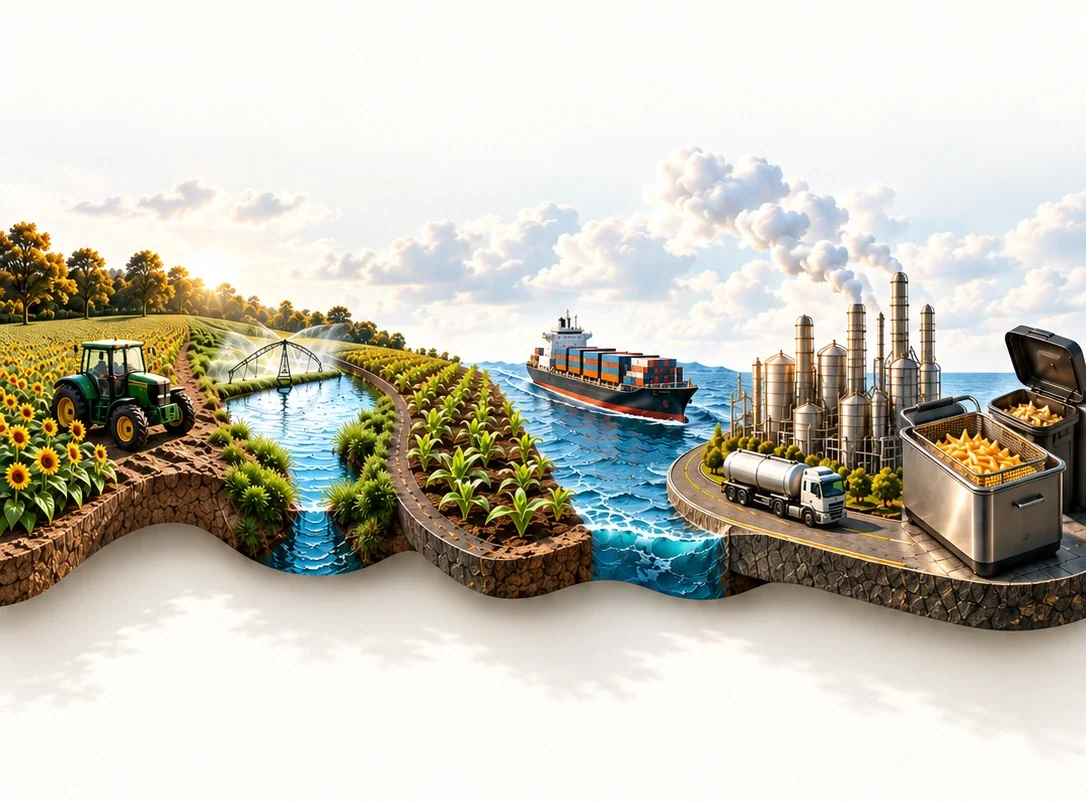
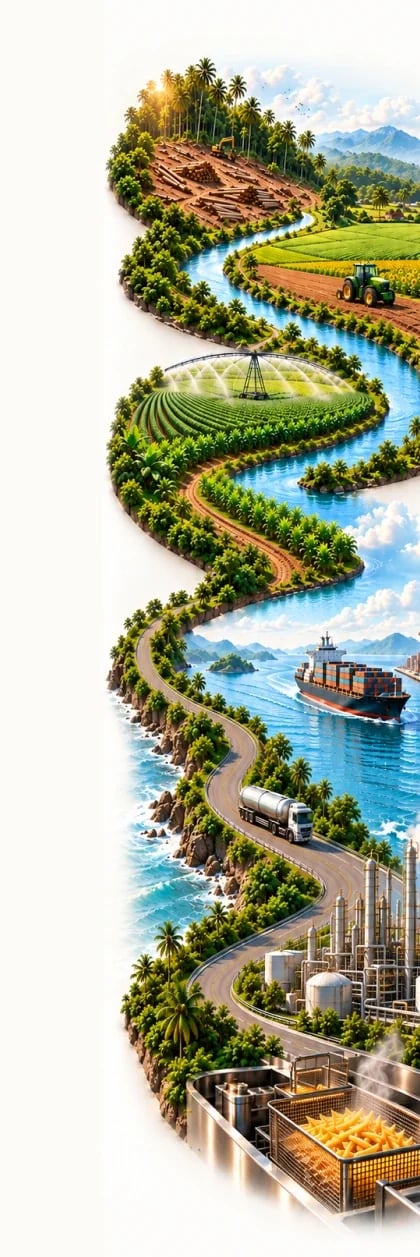
Land Clearing
Forests felled for soy, palm, or sunflower crops
Water Use
4,000+ litres of water per kg of oil crop grown
Fertiliser & Farming
Chemical inputs, machinery, soil degradation
Sea & Road Freight
Transcontinental shipping from farm to port to factory
Oil Refining
Energy-intensive processing to produce refined frying oil
Your Fryer
Oil degrades and is disposed of too soon.

Three resources.
All measurably Reduced
When you extend the life of frying oil, you don't just save on procurement costs. You reduce demand across an entire global supply chain, from rainforest to refinery to fryer without changing how your kitchen operates.
3.81
kg CO₂e saved
Carbon footprint reduction
the median greenhouse gas footprint across all oil crop systems is 3.81 kg CO₂e per kg of refined oil produced. For every kilogram of frying oil demand eliminated through extended oil life, Beyond Oil helps operators reduce their carbon footprint by the same amount.
Source: ScienceDaily, 2022 — peer-reviewed study, 6,000 producers, 38 countries, 71%+ of global vegetable oil production.
4,000
litres of water saved
Water footprint reduction
Every kilogram of oil consumption reduced through Beyond Oil also saves the water used to produce it, at source, where it matters most.
Sources: Water Footprint Database (Mekonnen & Hoekstra) · Mekonnen-Hoekstra 2011
70%
oil consumption reduced
Oil waste elimination
Used cooking oil creates waste, emissions, and additional costs. The more often oil is replaced, the more oil needs to be purchased, transported, and disposed of. By extending oil life, Beyond Oil can reduce oil consumption by up to 70% for high-volume operators. Less oil used means less oil purchased and less waste generated. Across large multi-site operations, this can significantly reduce both waste and the emissions associated with producing and disposing of the oil.
Source: Beyond Oil operational data across foodservice customers globally.

Your Scope 3 commitment.
One simple habit.
Beyond Oil helps reduce Scope 3 supply chain emissions in a measurable way, without changing your menu, equipment, or kitchen routine.

Calculate your
sustainability impact.
Enter your operation's basic parameters and we'll estimate the CO₂e reduction, water savings, and oil savings, figures you can use directly in your ESG reporting.
- Oil saved per year
- 44,773 kg
- CO₂e reduced per year
- 170,586 kg
- Water saved per year
- 199.2M L
Based on peer-reviewed science. Oil density ~0.92 kg/L. CO₂e: 3.81 kg/kg oil. Water: avg. 4,450 L/kg oil.
*All outputs are based on peer-reviewed science. The CO₂e estimate is based on the median value of 3.81 kg CO₂e per kg of oil from a 38-country industry study. Water estimates are based on crop-specific data from the Mekonnen-Hoekstra global water footprint dataset.